Ravise: A Modern Serif Font for Professional and Creative Projects
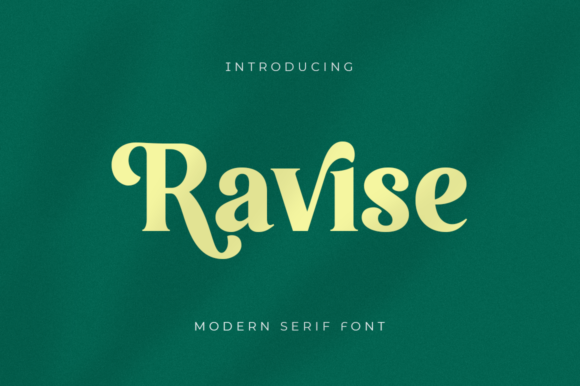
Ravise is a modern and strong lettered serif font that has been gaining popularity among designers, marketers, and creatives. With its clean lines, elegant curves, and versatile design, Ravise is perfectly suited for a wide range of applications—from stationery and logo design to website headers and packaging. Whether you're looking to create a striking magazine cover or enhance your brand identity, Ravise offers a professional yet approachable aesthetic that can elevate your visual projects.
Why Choose Ravise?
Ravise stands out due to its balance between traditional serif elegance and contemporary minimalism. This makes it ideal for both digital and print media. Its strong letterforms ensure readability even at smaller sizes, while the subtle serifs add a touch of sophistication. As a result, Ravise is often used in branding, editorial design, and web development where clarity and style are equally important.
Many professionals find Ravise particularly useful for creating logos that convey trust and professionalism. The font's structure allows for customization, making it easy to adapt to different industries and brand identities. From fashion labels to tech startups, Ravise has proven itself as a reliable choice for visual communication.
Common Mistakes When Using Ravise
While Ravise is a powerful tool, there are common mistakes that users make when choosing or applying it. One frequent error is using it inappropriately for certain types of content. For example, some designers might apply Ravise to long paragraphs of text without considering legibility. This can lead to eye strain and reduce the effectiveness of the message being communicated.
Another mistake is not checking how Ravise looks across different platforms and devices. Since fonts can render differently on screens versus printed materials, it's essential to preview them in various contexts before finalizing a design. Failing to do so might result in unexpected visual outcomes that could compromise the overall quality of the project.
Overlooking Font Pairing
A common oversight is not pairing Ravise with complementary fonts. While Ravise is strong on its own, combining it with a sans-serif font for body text can enhance readability and visual hierarchy. Neglecting this step may lead to a cluttered or unbalanced layout, especially in longer documents or websites.
To avoid this, consider using Ravise for headings and titles, while opting for a simpler, more readable sans-serif font for body copy. This creates a harmonious contrast and ensures that the reader’s focus remains on the content rather than the typography.
Ignoring Licensing and Usage Rights
One critical but often overlooked aspect of using Ravise is understanding the licensing terms. Many users download fonts from free sources without realizing the limitations of their use. Some licenses restrict commercial use or require attribution, which can have legal implications if ignored.
Before downloading or purchasing Ravise, always review the license agreement carefully. If you plan to use it for client work or commercial projects, ensure that the font is available under a suitable license that covers your intended use. This prevents potential issues down the line and protects your professional reputation.
How to Use Ravise Effectively
To get the most out of Ravise, start by experimenting with different weights and styles. Many versions of Ravise include variations like bold, italic, and light, which can be used to emphasize key points or create visual interest. However, it's important not to overuse these variations, as too much emphasis can distract from the main message.
When designing with Ravise, pay attention to spacing and alignment. Proper kerning and leading (line spacing) can significantly impact the overall appearance of your text. If you're not confident in adjusting these manually, many design software tools offer automatic adjustments that can help maintain consistency and professionalism.
Additionally, consider the context in which you're using Ravise. For instance, in a clothing label or packaging design, the font should be legible from a distance. In such cases, using a larger size or ensuring sufficient contrast with the background can improve visibility and usability.
Real-World Examples and Better Approaches
Imagine designing a book cover with Ravise. A common mistake would be to use the same font for both the title and subtitle without varying the weight or size. Instead, using a bold version of Ravise for the title and a lighter variant for the subtitle can create a clear visual hierarchy and draw attention to the main title.
Another scenario involves using Ravise for a website header. If the font is too small or lacks contrast against the background, visitors may struggle to read the content. To avoid this, test the font in different color combinations and sizes to ensure optimal readability and aesthetics.
What to Check Before Using Ravise
Before incorporating Ravise into your design, take time to evaluate several factors. First, assess whether the font aligns with your brand's personality and target audience. If your brand is youthful and innovative, a more modern serif like Ravise might be appropriate. However, if your brand leans towards tradition, a classic serif could be a better fit.
Next, check compatibility with your design tools. Not all fonts work seamlessly across different platforms, so verify that Ravise is supported by the software you're using. Additionally, ensure that the font file is properly installed and accessible in your design environment to avoid any technical issues during the creation process.
Lastly, always conduct a thorough review of your design after applying Ravise. Look for any inconsistencies in spacing, alignment, or readability. Seeking feedback from peers or clients can also provide valuable insights and help identify areas for improvement.
By avoiding common mistakes and following best practices, you can effectively leverage Ravise to create visually appealing and professionally crafted designs that resonate with your audience and achieve your creative goals.